

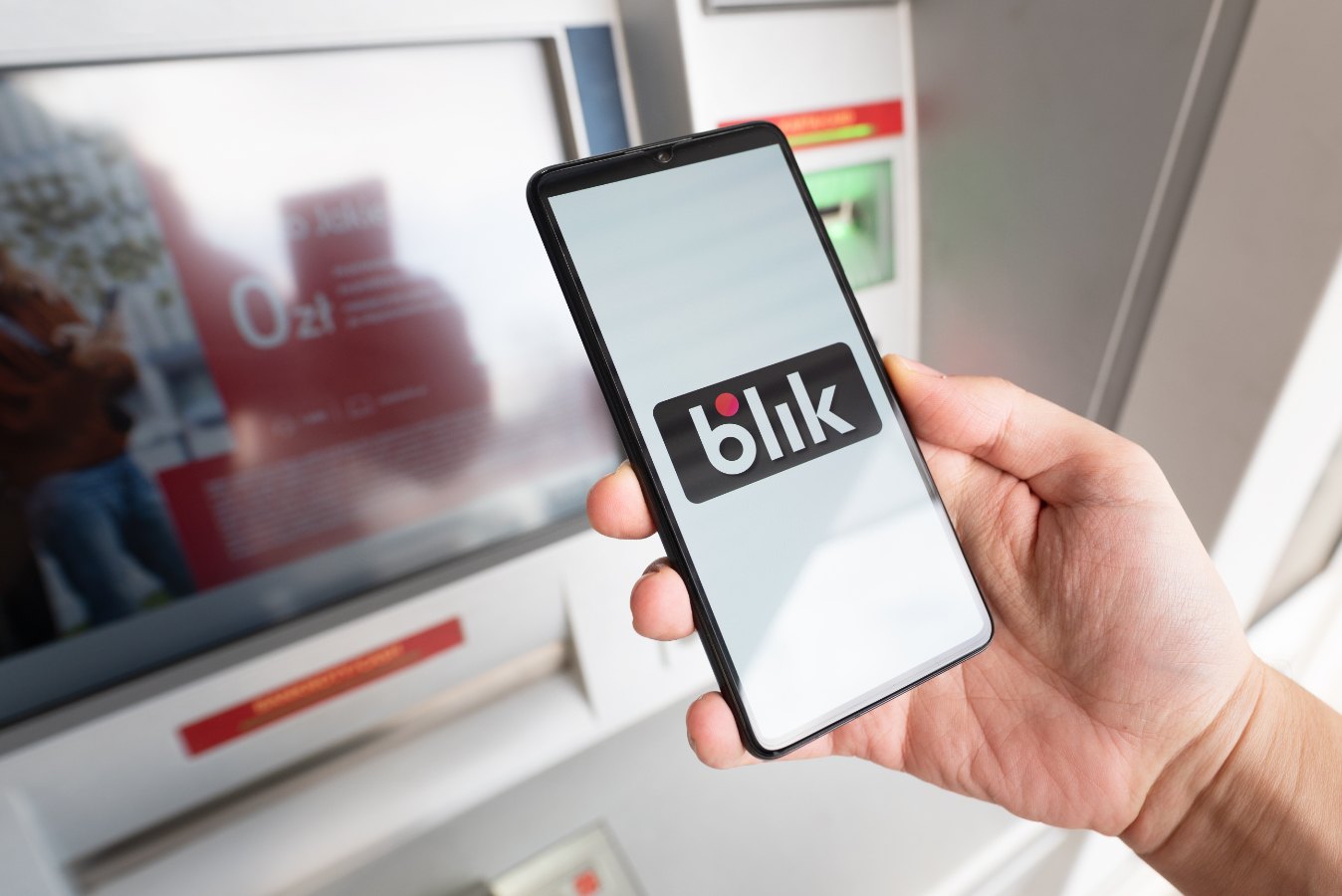
Polski Standard Płatności announced automatic checks of gambling domains for BLIK payments. A statement quoted by PAP on 22 July 2026 gave a planned launch date of 1 September 2026. We confirmed the announcement; we have not obtained separate, current confirmation of its technical implementation.
According to its announcement, Polski Standard Płatności, the operator of BLIK, planned to introduce a mechanism that automatically checks whether the domain associated with a transaction appears in the Ministry of Finance's Register of Domains Used to Offer Gambling Contrary to the Act.
The operator's description says payments to listed domains are to be blocked. The announced mechanism covers transactions processed by both domestic and foreign acquirers.
This does not mean BLIK is withdrawing from the entire gambling industry. The block concerns websites operating in Poland in breach of applicable rules.
BLIK checks domains before processing payments
According to the statement, domain checking is intended to operate automatically.
When a transaction is made, the system can verify the originating domain. If it appears in the Ministry of Finance register, the transaction is stopped.
According to the announcement, domain status is to be verified during transaction processing, without users having to check it manually.
As PSP stated in the release quoted by PAP, it received approval from the President of the National Bank of Poland to introduce the solution. The operator also emphasised that it is intended to cover payments processed by foreign acquirers, which matters for an online gambling market operating across national borders.
Why was the block introduced?
Online iGaming is an international market.
An operator may hold a licence and operate legally in its home jurisdiction without automatically having the right to offer services to people in Poland.
This is an important distinction.
Poland has its own rules for organising gambling. Websites targeting Polish users without the required domestic permissions may be entered in a dedicated Ministry of Finance register.
BLIK’s new measure aims to restrict payments to precisely these websites.
Poland has only one legal online casino
The changes to BLIK provide an opportunity to explain a central rule of Poland’s gambling market.
Poland has one legally operating online casino: Total Casino, run by Totalizator Sportowy.
The Ministry of Finance's official list identifies Totalizator Sportowy as the online casino operator and totalcasino.pl as the legal domain for this activity.
This is not caused by a lack of interest from private operators.
Polish law is deliberately structured so that online gambling, with specified exceptions, falls within the state monopoly.
Under Article 5(1b) of the Gambling Act, organising gambling over the internet, other than betting and promotional lotteries, is subject to a state monopoly.
In practice, private operators cannot obtain a conventional Polish licence to run an online casino offering slots, roulette or card games in the way permitted in some other European markets.
Total Casino and the state monopoly
The state exercises the online casino monopoly through Totalizator Sportowy.
That is why Total Casino remains Poland's only legal online casino. The Ministry of Finance has also explained this principle in its statements on the gambling market.
The state model is intended to enable close oversight of online casino operations and limit gambling-related social harm.
Lawmakers treat gambling as an activity requiring specific regulation because of addiction risks, player protection and the security of money flows, among other factors.
This should not be taken to mean that Total Casino is the only legal form of online gambling in Poland.
That is not the case.
Legal bookmakers can be private companies
Polish rules provide exceptions to the state monopoly.
One of the most important exceptions is betting, primarily bookmaking.
Private businesses may legally offer online betting if they obtain the required permit from the relevant authority.
The Ministry of Finance publishes a list of legal businesses in Poland’s betting market, including private operators holding appropriate permissions.
It is therefore important to distinguish two concepts:
an online casino and an online bookmaker.
Online casino games fall under the state monopoly, while private operators with Polish permits may also offer betting.
A foreign licence is not enough
This is particularly important for people using foreign iGaming websites.
A licence issued by another country’s authority does not automatically entitle an operator to legally target people in Poland.
A website may operate legally in its country of registration while lacking the permissions required to operate in the Polish market.
The Ministry of Finance notes that foreign operators licensed elsewhere may still operate illegally in Poland if they offer games without the required domestic permissions.
A Polish-language version, the ability to register or access from Poland is therefore not proof of legality.
The illegal domain register
The Ministry of Finance maintains the public Register of Domains Used to Offer Gambling Contrary to the Act.
The register includes domains used to offer or promote gambling in breach of Polish rules.
Listing a domain triggers obligations including blocking access from Poland. Register information can also be transmitted automatically to telecommunications companies and payment service providers.
The announced BLIK mechanism is intended to use this register.
If a domain is listed, BLIK payments to it may be blocked.
What does this mean for BLIK users?
For most BLIK users, practically nothing changes.
The measure does not concern ordinary online shopping, in-store payments or other standard uses of the system.
It targets transactions directed to gambling domains considered to operate contrary to Polish rules.
A user attempting to pay such a website may have the transaction rejected.
This need not indicate a bank account problem or BLIK outage. The cause may be the domain’s status in the state register.
What does the change mean for iGaming?
The measure shows how important payment systems are becoming in iGaming regulation.
Blocking a website is one level of enforcement.
Restricting transfers of money is another.
For foreign operators, it is a clear reminder that activity across multiple markets requires considering not only the company’s registration jurisdiction but also the laws of the country targeted.
For users, it means paying closer attention to a website’s legal status before opening an account and depositing money.
How can you check whether a service is legal?
Use official information published by the Ministry of Finance.
The ministry maintains lists of legal online operators as well as the register of domains used for activities contrary to the Act.
For online casinos, the position is currently particularly straightforward.
The legal online casino operating in Poland is Total Casino, run by Totalizator Sportowy.
Bookmaking is different. Multiple operators may operate legally provided they hold the required Polish permit.
Always verify the specific brand in the official list.
BLIK creates another barrier to illegal gambling
The announced automatic block forms part of the system restricting illegal gambling services in Poland. The planned date of 1 September does not itself confirm that the mechanism actually launched.
According to the announcement, BLIK is to use the state register to verify domains automatically.
This is a significant change for Poland’s iGaming industry.
It also demonstrates how considerably the Polish market differs from some other European jurisdictions.
In Poland, online casino games are covered by a state monopoly, and Total Casino, operated by Totalizator Sportowy, remains the only legal online casino. Private operators may legally offer activities including betting if they hold the required permits.
Radio Sloty will follow further developments in payments, regulation and Poland’s iGaming market.
18+ | Gambling involves the risk of financial loss and addiction. Play responsibly and use only legal services.
Sources and verification
- PAP — Polski Standard Płatności statement dated 22 July 2026
- Ministry of Finance — public domain register
- Ministry of Finance — information on tax and gambling
PAP quotes BLIK's operator. We distinguish the announced mechanism from independent confirmation that it is currently operating. Sources checked on 4 October 2026. Conditions and publications may be updated.
Readers' voices
Add your perspective, relevant context or a question about this story.
No one has commented on this material yet. You can be the first.